
Horse racing is one of the oldest and most established forms of sports betting in the world. Races have been wagered on for centuries, and the sport has evolved into a global betting market with events running year-round across major racecourses in the United Kingdom, Ireland, Australia, the United States, and beyond. What makes horse racing distinct from most other betting sports is the number of competitors in each event and the range of factors that influence outcomes, from the horse’s recent form and the jockey’s experience to track conditions, race distance, and draw position. For bettors who invest time in understanding these variables, horse racing offers a rich analytical environment with consistent opportunities throughout the racing calendar. This guide is part of Sports Betting Guides and covers the horse racing betting markets available on SkyExchange. Bettors who enjoy analysing individual competitor form and odds value will find similar analytical principles covered in the Table Tennis Betting Guide.
How Horse Racing Betting Works
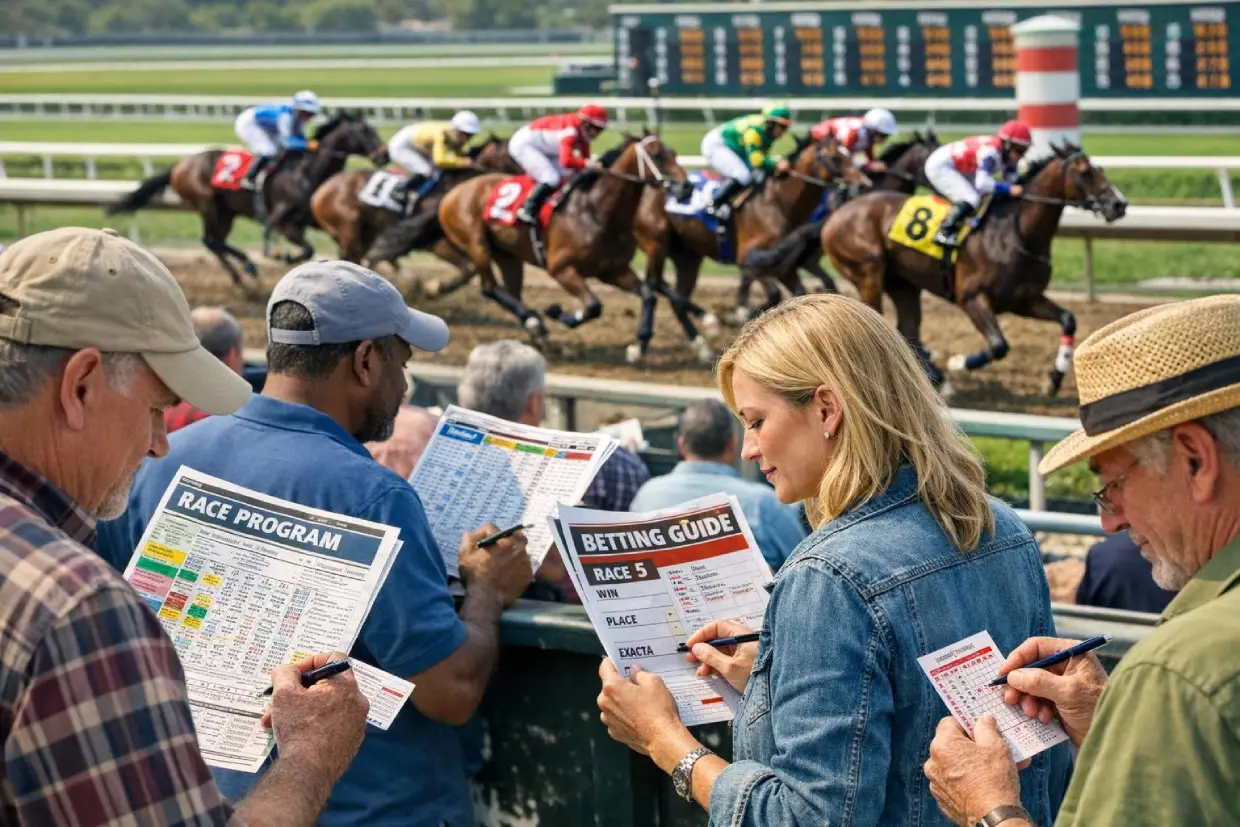
Horse racing betting involves predicting how horses will finish in a race. Unlike team sports where a match involves two sides, a horse race can feature anywhere from a handful of runners to a large field of twenty or more, each with their own odds reflecting their perceived chance of winning. This multi-competitor format creates a betting environment unlike any other sport, with odds that shift significantly based on betting activity in the market leading up to the race.
The starting point for any horse racing bet is selecting the race you want to analyse. Race meetings take place at multiple venues throughout the day, and each meeting features several individual races with different distances, going conditions, and class levels. Bettors who focus on a specific type of race, such as flat racing or jump racing, or on a particular racecourse they know well, tend to develop more accurate assessments over time than those who spread their attention across every available race indiscriminately.
Understanding the information available before a race is central to horse racing betting. The form guide, which records each horse’s recent race results, finishing positions, and performance ratings, is the primary analytical tool used by racing bettors. Alongside form, factors such as jockey bookings, trainer statistics, track conditions, and the weight each horse is carrying all contribute to a complete pre-race assessment.
Types of Horse Racing Bets
Horse racing offers a range of betting markets that vary in complexity and potential return. Understanding what each market requires in terms of prediction accuracy helps bettors choose the option that best fits their analysis and risk preference.
Win Bet
The win bet is the most straightforward horse racing wager. Bettors predict which horse will finish first in the race. If the selected horse wins, the bet pays out at the odds available at the time the wager was placed. Win bets offer the clearest and most direct expression of a betting view on a race and are the natural starting point for bettors new to horse racing markets.
Place Bet
A place bet wins if the selected horse finishes within a specified number of top positions rather than winning outright. The number of qualifying places depends on the size of the field, with larger fields typically paying out on more positions. Place bets carry lower odds than win bets because the probability of success is higher, but they provide a buffer against a horse that runs well without quite winning. This market is useful when a bettor is confident a horse will perform strongly without being certain it will win outright.
Each Way Bet
The each way bet combines a win bet and a place bet in a single wager. Half the stake goes on the horse to win and the other half goes on the horse to finish in a qualifying place position. If the horse wins, both halves of the bet pay out. If the horse finishes in a place position without winning, only the place portion pays out at reduced odds. Each way betting is popular for races with large fields where a strong fancied horse may face significant competition but is still considered capable of finishing near the front.
Exacta Bet
The exacta bet requires predicting which two horses will finish first and second in the correct order. Because this market demands a more precise prediction than a simple win bet, it carries significantly higher odds and potential returns. Exacta betting is most approachable in smaller fields where the number of possible finishing combinations is more manageable, and it rewards bettors who have a strong view on both the likely winner and the horse most likely to finish directly behind it.
Horse Racing Betting Tips
Horse racing rewards patient, methodical analysis more than almost any other betting sport. The volume of races available each day can tempt bettors into placing wagers without sufficient preparation, which is one of the most common mistakes in this market. Developing a disciplined approach to race selection and analysis is the foundation of sustainable horse racing betting.
Study Horse Form
The form guide is the most important tool available to a horse racing bettor. Recent race results, the quality of competition faced, finishing margins, and performance ratings across different going conditions all contribute to a picture of how a horse is likely to perform in an upcoming race. A horse that has finished strongly in its last two or three outings under similar conditions is a more reliable analytical starting point than one whose form is inconsistent or whose best results came under very different circumstances.
Evaluate Jockey and Trainer Combinations
The jockey riding a horse and the trainer preparing it both have significant influence on race outcomes. Some jockeys perform particularly well at specific racecourses or over certain distances. Some trainers have strong records when running horses for the first time at a new venue or after a rest period. Tracking the statistical records of leading jockey and trainer combinations, particularly when they team up on a horse that fits a profile they have succeeded with before, adds a layer of analysis that pure form reading does not capture.
Consider Track Conditions and Going
Going describes the state of the ground on a racecourse and has a direct impact on how horses perform. Some horses are bred and trained to perform on firm fast ground, while others are most effective on soft or heavy going. A horse whose best form has come on good to firm ground may struggle significantly on a rain-softened track, while a mudlark that thrives in testing conditions may be underestimated when the ground is soft. Checking the going forecast for race day and cross-referencing each horse’s form against their going preferences is one of the most practically useful analytical steps in horse racing.
Factor in Race Distance
Horses have optimal racing distances that suit their physical make-up and breeding. Sprint specialists over five or six furlongs are very different athletes from horses bred for staying distances of two miles or more. A horse stepping up or dropping down significantly in distance from their recent races may perform differently from how their form suggests, and distance suitability is always worth checking before finalising any bet.
Live Horse Racing Betting
Live betting in horse racing operates differently from most other sports because races themselves last only a few minutes, leaving little time for in-race wagering. The most active period for live horse racing betting is in the minutes immediately before the race begins, when market moves and late jockey bookings can cause significant odds shifts that create value for bettors paying close attention.
Odds fluctuations in the final minutes before a race often reflect informed money entering the market. A horse whose odds shorten sharply in the last few minutes before the off is often attracting professional betting activity based on stable confidence or track gallops that are not publicly available. Conversely, a horse drifting in the market may be doing so because connections are less confident than the original odds suggested. Reading these market moves requires experience but becomes one of the most valuable skills a horse racing bettor can develop over time.
Horse Racing Betting Odds
Horse racing odds express the probability assigned to each horse finishing in a specific position and determine the return on a winning wager. Decimal odds are the most widely used format on online platforms. Odds of 5.00 return five times the stake on a winning bet, while odds of 1.40 return less than one and a half times the stake. In horse racing, short odds on a favourite reflect a high implied probability of winning, while large field races with no dominant favourite will distribute odds more broadly across the runners.
The favourite wins a significant proportion of horse races statistically, but backing favourites consistently does not produce long-term profit because their odds are priced to reflect their likelihood of winning. Finding value in horses whose odds are higher than their actual winning probability justifies is the central challenge of horse racing betting, and it is what separates bettors who approach the sport analytically from those who simply back the most fancied runner in every race.